

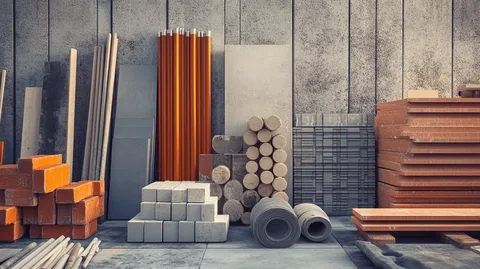
The best building materials supplier in New York or Connecticut is the one that stocks properly graded lumber, knows your state’s energy code, and delivers when your crew is ready. Price matters, but a wrong grade, a missed delivery window or a failed insulation inspection costs more than a few cents per board foot.
This guide is for contractors, remodelers and homeowners buying framing, roofing, concrete, insulation and finish materials across New York City, the Hudson Valley, upstate New York and Connecticut. Five checks separate a dependable supplier from an average one:
- Grade-stamped stock, with staff who can read the stamp and match it to your span or load
- Code knowledge, especially insulation R-values for your state and climate zone
- Delivery that fits the site, from a Brooklyn curb to a rural Connecticut driveway
- Clear pricing, including how contractor accounts and bulk orders work
- Services that save labor, such as custom cutting and accurate takeoffs
The sections below cover each one, followed by a checklist you can use before you open an account.
Read the lumber stamp before you read the price
Every piece of framing lumber carries a stamp showing its grade, species group and moisture content, and a good supplier can explain it in a minute. Fine Homebuilding’s guide to lumber stamps covers the basics.
For structural light framing, the grades run Select Structural, No. 1, No. 2 and No. 3. These carry the highest strength values and are used for joists, rafters and trusses. “Stud” grade is meant for vertical loads only. A higher grade can always replace a lower one, but never the other way around.
| Stamp mark | What it means |
| S-DRY, KD | Dried to 19% moisture or less |
| KD-HT | Kiln-dried and heat-treated to kill pests and fungi |
| MC-15 | 15% moisture or less |
| S-GRN | Surfaced green, above 19% moisture |
| SPF | Spruce, pine and fir, sold as one species group |
| Hem-Fir | Hemlock and fir, sold as one species group |
Moisture is measured at the mill, not at the yard. Ask how the supplier stores lumber after it arrives: covered, off the ground and strapped. Framing that sat in the rain for two weeks can twist before you nail it.
Three questions to ask at the counter:
- Which species and grades do you keep in stock, and in which lengths?
- Is the lumber stamped KD or MC-15, or is it green?
- Do you carry engineered products such as LVL beams and I-joists, or are they special order?
Ask whether your supplier knows your state’s energy code
New York and Connecticut enforce different energy codes, so an insulation order that works in one state may not pass inspection in the other. Your supplier should know which code applies to your address.
New York
The 2025 Energy Conservation Construction Code of New York State became mandatory on December 31, 2025, and it is based on the 2024 IECC. Insulation ordered from an old spec sheet can fail inspection, so your supplier should know what the current code asks for.
The Insulation Institute’s summary of the new code lists these prescriptive options. “ci” means continuous insulation, such as rigid foam or mineral wool board over the framing.
| Component | Prescriptive options listed |
| Ceiling | R-49 |
| Wood-frame wall | R-30, or R-20 + R-5ci, or R-13 + R-10ci, or R-20ci |
| Floor | R-30, or R-19 + R-7.5ci, or R-20ci |
| Basement wall | R-19, or R-15ci, or R-13 + R-5ci |
| Slab | R-10ci, 4 feet deep |
The summary does not tie each row to a climate zone, and the code assigns requirements by county in Table R402.1.3. ETS’s summary of the 2026 residential changes place Long Island in Climate Zone 4A. Confirm your county’s values with your local code official before you order.
New York City works under its own code. NYC Buildings publishes a separate 2025 Energy Conservation Code covering residential and commercial work in the five boroughs, so tell your supplier which side of the city line your project is on.
Connecticut
Connecticut enforces the 2021 IECC with state amendments, which took effect on October 1, 2022, according to the U.S. Department of Energy’s Connecticut code status page. A 2026 Connecticut State Building Code is expected to adopt the 2024 IECC, but the state’s code adoption page says it is awaiting legislative review and its effective date has been delayed. Ask your town’s building official which edition applies when you pull your permit.
The Insulation Institute’s Connecticut summary lists these Climate Zone 5 options for the 2021 code:
| Component | Prescriptive options listed |
| Ceiling | R-60 |
| Wood-frame wall | R-30, or R-20 + R-5ci, or R-13 + R-10ci, or R-20ci |
| Basement wall | R-19, or R-15ci, or R-13 + R-5ci |
| Crawl space wall | R-19, or R-15ci, or R-13 + R-5ci |
The two summaries list different ceiling values, R-60 for Connecticut and R-49 for New York, so do not assume one stocking list fits both states.
What to expect from your supplier
A supplier who knows the code will do three things for you:
- Show you the R-value on the product label or data sheet, not just the thickness
- Explain when you need continuous insulation and when cavity insulation alone is enough
- Keep the products for both approaches in stock, such as batts, rigid board and mineral wool
Match the delivery to your site, not the other way around
A delivery that works for a Long Island driveway can fail on a narrow Brooklyn block, so ask how a supplier delivers to your kind of site before you order. Good delivery saves a crew half a day of hauling. Bad delivery stops the job.
In New York City, the site often sets the rules. The NYC Buildings sidewalk shed page says the pedestrian passageway under a shed must stay at least 5 feet wide with 8 feet of clearance and be lit at all times. It also says storing material on top of a shed is not advisable and may be illegal. A shed that extends into the street needs a DOT Building Operation Permit, and some work needs an after-hours variance. Plan the drop-off around those limits before the truck leaves the yard.
Connecticut sites bring different limits: narrow shoreline roads, steep driveways in hill towns and tight village centers. Road and street-use rules can vary by town, so ask the supplier whether the driver knows your town’s restrictions, and check with the town building department if the truck will block a road.
Time deliveries to the build, not to the calendar. Framing lumber should arrive when the slab or foundation is ready, roofing materials when the sheathing is dry, and insulation before the drywall crew needs the walls. Materials that show up too early sit in the weather or get stolen. Materials that show up late hold up every trade behind them.
Questions to ask before you order:
- What truck do you send, and can it reach my site? Ask about boom or crane trucks for lumber and sheet goods.
- Who unloads, and how long will the driver wait?
- What is the delivery window, and can you commit to a time for critical drops?
- Is there a delivery fee, and is there a minimum order?
- What happens if an order arrives short, wet or damaged?
Understand how pricing works before you compare quotes
Two quotes for the same materials can differ by more than the product price, so compare what each one includes. Wholesale and retail accounts work differently, and many suppliers serve both.
| Wholesale or contractor account | Retail | |
| Typical buyer | Contractors and repeat, high-volume buyers | Homeowners and one-off projects |
| Price per unit | Lower, and often tied to volume | Higher, but no commitment |
| Account setup | Application, and sometimes proof of business | None |
| Payment terms | Often a trade account with net terms | Pay at purchase |
| Best for | Whole-job packages and ongoing work | Small orders and quick fixes |
If you are not a licensed contractor, ask anyway. Some suppliers give volume pricing to any buyer who orders a full package, such as framing for an addition or roofing for a whole house. The worst answer is no.
To get a quote you can compare:
- Send a complete material list with quantities, sizes, grades and brands.
- Ask for the price per unit and the total, with delivery and tax shown separately.
- Ask how long the price is held, because lumber and other commodity-driven items can move between quote and order.
- Ask what the return policy is for unopened and cut materials.
Ordering a full package at once usually lowers the cost per unit and cuts the number of deliveries. The tradeoff is storage: you need a dry, secure place to hold the order, which is hard on a tight New York City lot.
Look for services that save labor on site
The services around the product often save more than a discount does. On a New York job, where space and time are tight, these four matter most:
- Custom cutting. Lumber cut to length at the yard means less waste, less noise and less sawdust on site. It helps most on repeat parts such as blocking, rafters and trim stock.
- Takeoffs. A supplier who can build a material list from your plans catches missing items before they delay the job. Ask whether the service is free and how accurate their past lists have been.
- Staged orders. Splitting an order by project phase lets you pay and receive as the work moves, instead of storing everything at once.
- Special orders. Windows, doors and engineered beams often take longer than stock items. Ask for the lead time at the quote, not after the deposit.
Innovate Develop: Building & Material Goods
Ask for sustainable options by product, not by slogan
A supplier can only help you build greener if it can name the specific products and the proof behind them. “Eco-friendly” on a sign means little. These are the claims you can check:
- Lumber: Look for Forest Stewardship Council (FSC) certification. Ask for the chain-of-custody certificate number for the product you are buying.
- Insulation: Ask which products contain recycled material, such as cellulose made from recycled paper or mineral wool made from slag, and what R-value each gives per inch.
- Concrete: Ask whether mixes can replace part of the cement with fly ash or slag. Your engineer or code official may need to approve it for structural work.
- Paints, sealants and adhesives: Ask for low-VOC products, and read the VOC figure on the label or data sheet.
Sustainable products can cost more or take longer to get, so ask for the price and lead time at the quote, not at checkout.
Run this checklist before you open an account
Use it on a call or a yard visit. A supplier who answers all of it clearly is worth trying on a small order first.
- The stock I see online is actually on the shelf or in the yard
- Lumber is stamped with grade, species group and a moisture mark
- The supplier can tell me which energy code applies to my address
- Delivery windows, fees and the damage policy are in writing
- I have a named contact for my account, not just a general line
- Opening hours suit my crew, including early will-call pickup
- Return and restocking terms are clear for unopened and cut material
- I have two references from contractors working in my area
- I have compared a full-package quote from at least two suppliers
Frequently asked questions
Which energy code applies to my New York City project?
NYC Buildings publishes its own 2025 Energy Conservation Code for the five boroughs. The state code says it applies to buildings across New York State, including in the city. Ask your architect or code consultant which one governs your permit before you order insulation.
Which energy code does Connecticut enforce?
Connecticut enforces the 2021 IECC with state amendments, effective October 1, 2022. A 2026 code based on the 2024 IECC is awaiting legislative review with no effective date announced, so confirm the edition with your town’s building official before you order.
What grade of lumber do I need for floor joists?
It depends on the span, species, spacing and load, so use your plans or an engineer’s span table. No. 1 and No. 2 are structural light framing grades commonly used for joists and rafters. A higher grade can replace a lower one, but not the other way around.
How dry should framing lumber be?
KD and S-DRY stamps mean 19% moisture or less, and MC-15 means 15% or less. Lumber stamped S-GRN is above 19% and will keep drying after it is installed, so ask for a dry mark if your framing will be covered soon.
Can a supplier deliver to a building with a sidewalk shed?
Often, but access decides it. The passageway under the shed must stay at least 5 feet wide with 8 feet of clearance. Tell the supplier about the shed when you order so the driver and unloading plan fit the space.
How far ahead should I order?
Order stock items a few days ahead and special orders as soon as the plans are fixed. Windows, doors and engineered beams often take longer than stock lumber, so ask for the lead time when you request the quote.
Get a quote from Innovate Develop
If you are planning a project in New York or Connecticut, send us your material list and delivery address, and we will quote the materials, delivery and any cutting or special orders in one place.