

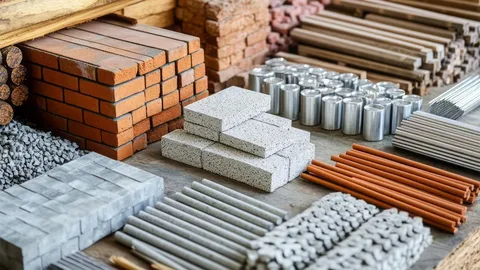
To build a home, office, or a basic garden shed, you need the right materials. All structures get their strength, safety, and weatherproofing from common building materials.
When you are building your dream space, you want it to last for decades. Innovate Develop LLC’s guide helps you make sense of building materials and their uses so you can build a space that you can enjoy.
Common Building Materials for Safe Constructions
For thousands of years, man has used natural resources to construct homes. Today, by using modern technology, structures are made much stronger and more efficient with common building materials.
The Importance of Material Selection
Saves lives:
Making the right decisions means saving lives in buildings.
Weather protection:
Proper surfaces prevent snow, rain, heat, and strong winds.
Controls your budget:
There are some resources that are more expensive initially but less expensive in the long run.
Energy efficient:
A good insulation material will maintain a comfortable indoor environment and reduce energy costs.
Types of Building Materials You Can Choose for Your Construction
- Natural resources.
- Engineered resources.
- Finishing resources.
Construction materials are typically divided into:
20 Commonly Used Building Materials and Their Uses
Heavy Structural Materials
| Material | How It Is Made | Use |
| Concrete | Cement, stone, sand, and water are mixed | Creating the foundation of structures |
| Steel | An alloy of iron and carbon. | Helps tall buildings and bridges keep their shape |
| Brick | Blocks of baked clay | Fire-resistant solid walls |
| Stone | Naturally found granite and marble stones | Cabinets and kitchen countertops |
| Wood | Timber trees | Used for roofing and rafters |
Modern Engineered Materials
| Material | How It Is Made | Use |
| Plywood | Thin pieces of wood glued together | In roof decking |
| Gypsum Board | Sheets of gypsum plaster sandwiched between paper sheets | Ceilings and interior walls |
| Glass | Fibers heated to create a transparent surface | Doors and windows |
| Aluminum | Light and rust-proof material made from metal | Exterior siding, gutters, and window frames. |
| Plastic | Synthetic PVC material made in factories | Plumbing pipes and vinyl fences |
Materials for Waterproofing and Insulation
| Material | How It Is Made | Use |
| Fiberglass | Blankets of glass fibers | Insulate attics by stopping heat transfer. |
| Asphalt Shingles | Gravel and asphalt mats | Used on roofs for waterproofing |
| Rubber | Tightly sealed thick rubber membranes | Seals commercial roofs |
| Lumber | Plastic and wood fibers are combined. | Keeps decks and fences rot-free |
| Stucco | Combines cement, sand, and plaster | Sprayed on walls for waterproofing |
Materials for Finishing
| Material | How It Is Made | Use |
| Mortar | A paste of cement and sand | Joins bricks and concrete blocks |
| Ceramic | Clay is baked to make tiles. | Waterproof flooring material |
| Bamboo | Natural bamboo grass is processed. | Interior flooring |
| Copper | Made from metal | Electrical wires and plumbing lines |
| Iron | Heating iron ore and carbon | Outdoor gates, railings, and security bars |
How To Choose Materials to Make Your Project a Success
The right selection of building materials and their use affects the whole construction period and the cost of your project.
- Check the local weather before making orders for materials.
- Use high-strength concrete of high strength in buildings that are situated on soils that are wet and unstable.
- Use modern white TPO or EPDM membranes to help reduce summer cooling costs on flat roofs.
- For structural wood framing used outdoors, use anti-rot chemicals.
| Material Category | Best Use | Best Structural Use Case |
| Asphalt | Very resistant to cracking, skidding, and gouging | Roads, driveways, parking areas, entryways, roofs, and waterproofing projects |
| Steel | High strength and elastic properties | The structural framework of tall towers used in commercial buildings |
| Wood | Easy to use and portable due to being lightweight | Framing buildings and making house roofs |
| Drywall | Makes flat, fire-retardant panels | Covering bare wall studs in interior areas. |
Conclusion
To create lasting structures, you need to know common building materials and their uses.
Whether it’s wood or concrete, every single piece has a purpose. Keep choices in mind to fit the weather and building needs.
Call a professional to finalize the type of building materials you are going to use so the structure stands tall for years to come.
FAQs
Which is the strongest material that is used in the construction of houses?
Structural steel is the strongest material of all, as it has a pretty good balance of compressive strength and tensile strength.
Why is concrete used to build foundations rather than wood?
Concrete will resist decay in the soil, insects, and rot. It also has a great compressive strength, which means that it is able to support the huge weight of a house with ease.
What is the difference between cement and concrete?
Cement is a fine powder of limestone and clay. Concrete is formed from the combination of cement powder, water, sand, and crushed gravel.
Which of the following is the most environmentally friendly building material?
Bamboo and natural stone are both environmentally friendly materials, both of which do not undergo factory processing.
Why was it that people are using drywall instead of plaster for the new walls?
Drywall is quicker and less expensive to install than wet plaster, which makes it more economical.